Building Relationships That Lead to Transformational Gifts
If you don’t ask, someone else will.
It isn’t a scare tactic. It’s simply the reality of philanthropy: every donor is capable of a transformational gift. The only real question is whether the ask that reaches them is thoughtful, timely, and rooted in a genuine relationship or whether it’s a general ask letter that happened to land in the right mailbox first. Confidence to ask isn’t optional in this work. It’s the job.
You’ve likely heard the old fundraising truism: people give to people. But like most pithy sayings, there’s more depth beneath it than the phrase alone. People give to people, yes, but the relationship itself needs to be with the mission. The gift officer, the board member, the executive director; we are not the destination. We are the conduit. Our job is to build a bridge sturdy enough that a donor’s heart can cross it and land somewhere durable: in the mission itself. A relationship anchored only to a person is fragile: it moves when that person moves on. A relationship anchored to a mission endures staff transitions, board turnover, even years of silence, because it was never really about us in the first place.
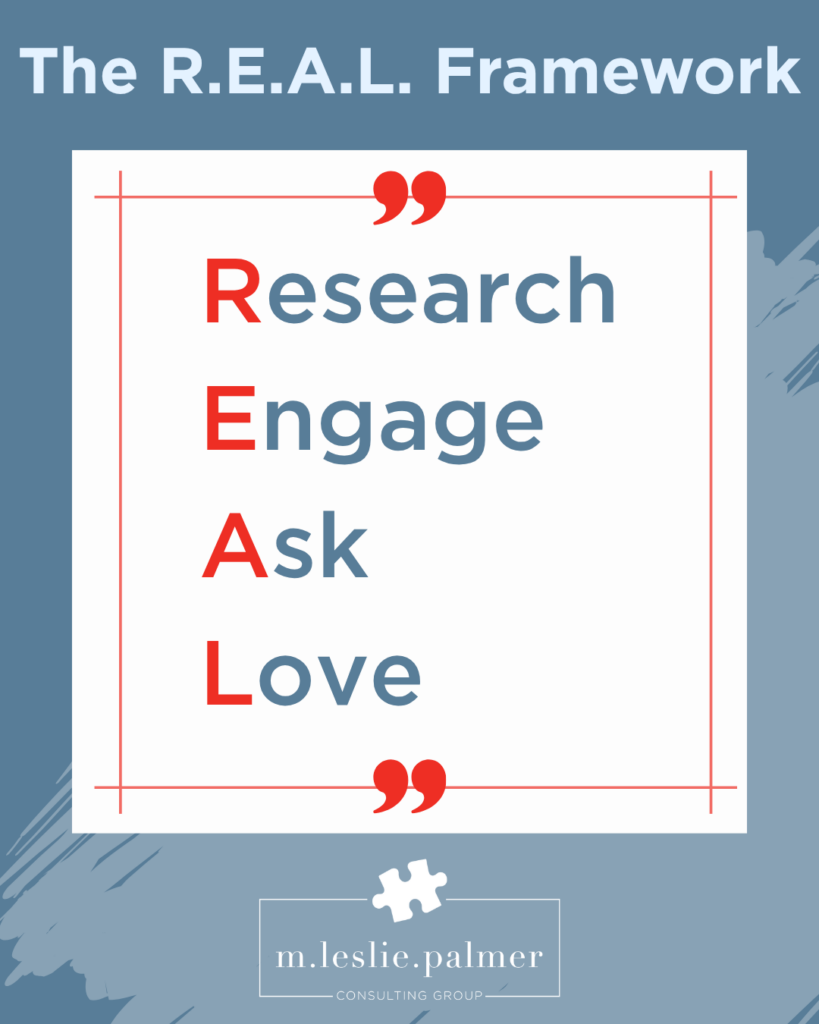
The R.E.A.L. Framework
Marc Pitman’s book Ask Without Fear!® gives us a simple, memorable structure for how transformational relationships are actually built not through a single dramatic “ask meeting,” but through a disciplined, repeatable process. I come back to it constantly with clients, and I think of it as the workflow underneath every good moves-management plan:
R – Research: Know what you’re asking for, and who you’re asking. Transformational gifts are never generic. They come from understanding a donor’s capacity, their history with the organization, and most importantly, what they actually care about.
E – Engage: Build real relationships before you ask. This is cultivation done right: not a countdown to the ask, but genuine curiosity about a donor’s story and their reasons for caring about your cause.
A – Ask: Make a clear, specific, confident ask. A strong ask has three parts: a vision link that ties the gift to something the donor already cares about, a specific invitation, not a vague one, and the discipline to sit in silence after you ask, rather than filling the pause. A donor who has been engaged well deserves a request that is direct, tied to real impact, and asked without apology.
L – Love: Steward donors well after every gift. The ask is not the finish line. How you treat a donor after the check clears often determines whether their next gift is bigger or whether it happens at all.
The Art of Engagement
Engagement done well is donor-led, not organization-led. It means bringing a donor into the room where the work is actually happening: a program visit, an introduction to the staff doing the work, engaging them to volunteer, instead of only sending updates about it after the fact. It means being honest about a setback or a stalled project alongside the wins, because donors trust an organization that tells them the truth more than one that only tells them good news. It means asking questions and genuinely listening for the answer, rather than steering every conversation back to what you want them to know. The donors who become transformational give not because they were the most impressed; they give because they felt most understood.
The Art of the Ask
The art in the ask itself has less to do with the words and more to do with two things gift officers often get wrong: timing and courage. Timing means asking when the donor is ready, not when the campaign calendar says it’s time. Courage means asking for the gift the relationship has actually earned, instead of retreating to a smaller, safer number that spares everyone the discomfort. Undersizing an ask isn’t humility, more often, it’s a sign the relationship wasn’t built as far as it needed to go before the ask happened. Frame the ask as an invitation to belong to something larger than a transaction, and let the size of the request reflect the size of the vision you’ve built together.
What Donors Are Actually Telling Us
When I ask donors what keeps them connected to an organization, the answer almost always sounds something like this:
“A gift officer provides me with a connection to the impact that my gift makes. They keep me informed about how my gift makes a difference: the challenges a project’s outcome may be facing, how I can help, and how the organization is addressing an issue I’m concerned about.”
Read that response closely and you’ll see both halves of this work living side by side. There’s the science of fundraising, stewardship, cultivation, solicitation, and moves management, the disciplined systems that make sure no donor falls through the cracks. There’s also the art, the harder-to-teach skill of understanding where a donor’s heart actually resonates, and identifying what keeps them leaning in. The best gift officers, and executive directors, practice both. Neither one works well without the other.

The Takeaway
So yes, people give to people. But make sure the relationship you’re building is one that ultimately belongs to the mission, not to any single person standing in front of it. Do the research. Engage before you ask. Make the ask with confidence and clarity. And love your donors well, long after the gift is given.
Because if you don’t ask with a real relationship behind it someone else will.
Reference: Marc Pitman, Ask Without Fear!® — asawithoutfear.com