A number, a date, a point in time, a memory.
This is not the story; it is my story. There are thousands, if not millions, of others who could pen their memories, and all would be equally valuable.
As Alan Jackson asks in his 2002 song, Where were you when the world stopped turnin’ That September day? I know exactly where I was, what I was doing, and how the days ahead would unfold before me.I was a very different person then – a single mother to a 16-year-old son, a professional firefighter working a second job as a marketing director for a mortgage company, and living in Newport, Rhode Island.
My boyfriend (who would eventually become my husband), Rudy, had been admitted to the hospital the night before. I was getting dressed to visit him when the news reported a plane hitting the first tower, and then the second, with the Pentagon and Shanksville, Pennsylvania, soon to follow.
My cell phone started ringing in short order. I made my way to the hospital while fielding calls about the request for support from the FDNY. Members of our department were deploying in response. They needed firefighters, particularly those trained in special hazards, search and rescue, and confined spaces. That was us.
We were going. Would I join them? Yes, but I had a few things to sort out first.
Was Rudy going to be okay? Yes. Then there was Kevin, my son. He was at boarding school, and I needed to talk to him. I had to tell him what I was thinking and why it mattered. Was he okay? Did he understand why I had to go? Yes.
In that moment, I knew he was my whole world, and I was his. For most of his life, it had been just the two of us, surrounded and supported by our village. He was scared, and honestly, so was I.
At the same time, my profession had never made more sense to me. I had skills, I was well-trained, and I was part of a team that could help. We were less than 200 miles away.
I explained to Kevin that if I were one of the firefighters or victims trapped in the rubble, he would want someone like me there to help.
“What if you don’t come back?” he asked.
With no way to prove it, I simply assured him that I would return and come see him at school as soon as I did. Then, I spoke to the school staff members I knew and trusted, asking them to watch over him until I got back.
We deployed on what we believed to be a rescue mission, arriving in New York City on September 12th. The day was as clear and beautiful as the day before, but the world was completely different. There wasn’t a single plane in the sky. The highways were entirely empty. We were forced to take a specific route, stopping at checkpoints to show identification and have our identities verified. In the distance, the smoke was still rising.
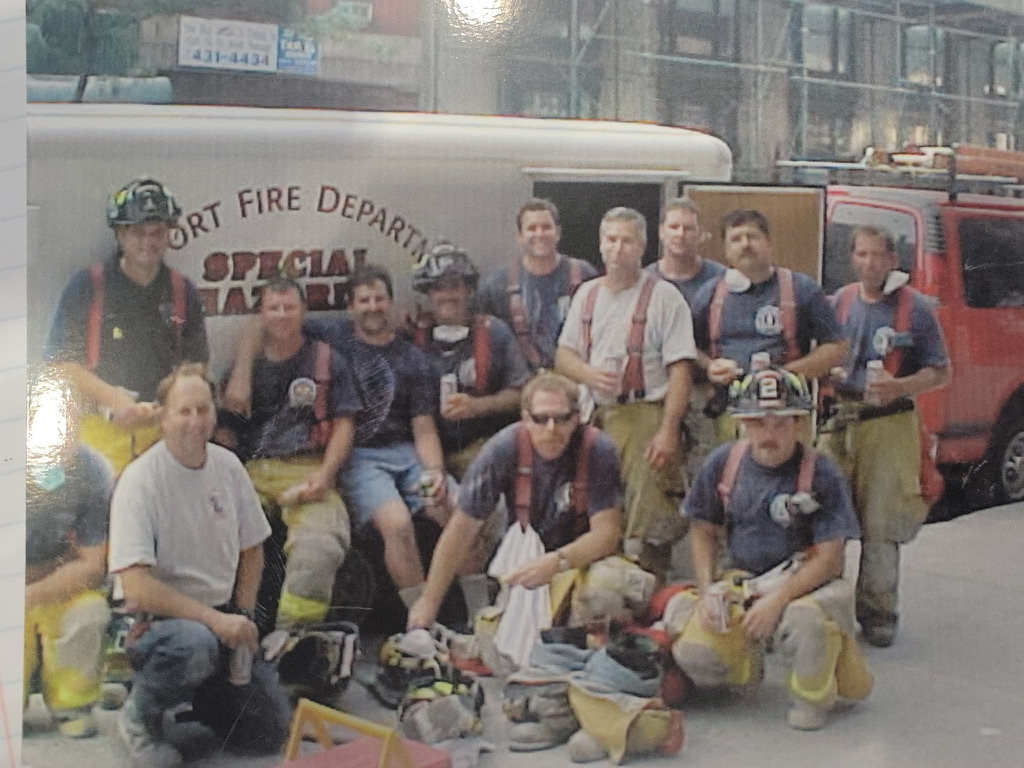
Our drive through the Holland Tunnel into Lower Manhattan felt like a scene straight out of a spy movie. Tractor-trailers blocked the entrance, parting only to let us through once authorities confirmed we were who we claimed to be: firefighters from the Newport Fire Department, coming to join our brothers already on the scene. At the time, I was the only sister.
Lower Manhattan looked like the set of that same movie, but this time, it was a war zone. Dust and debris hung thick in the air and littered the streets. Yet, the residents of the neighborhood were incredibly warm and welcoming, grateful we had come to help. Yes, we could use the restrooms in the basement of the bodega with the fruit stand outside, but there was no power, so don’t forget your flashlights.
As we walked the few blocks to Ground Zero, checking our gear, I realized I was participating in something much bigger than myself, bigger than all of us, and far beyond anything I had ever imagined.
Cell towers were down, and service was spotty at best, but miraculously, my cell phone rang. It was my brother and fellow professional firefighter, a well-respected, retired Captain. I was there with my nephew, his middle child, who was also a firefighter (yes, firefighting runs in the family). He called to tell us that he was with us in spirit, that he was proud of us, and to remind us of everything he had taught us which, for me, was a lifetime of lessons.
He had one final request: would I bring his daughter home when we returned? She had just started her freshman year at the Pratt Institute in Brooklyn and had watched the towers fall from her campus. The school was closing, and she was shaken to her core. Through my tears, I thanked him for calling and promised I would collect her and safely deliver both of his children home.
Looking back, I reflect on my hubris and am surprised by it. I have no idea where my confidence came from, but I simply knew that a job had to be done, and I was going to be part of the team that did it.
On that short walk, we passed the first of many abandoned fire trucks. The crews had left them behind to respond to the scene on foot, but those firefighters would never return. That day, 343 firefighters lost their lives. They died doing what they loved, serving a community they called home, and responding to a call. The exact work I did every single day.
“The Pile” was an incomprehensible heap of twisted metal and crumbled concrete. It contained the contents of two 110-story buildings: office equipment, furnishings, personal effects, and people. Fire and smoke were everywhere. Sometimes I can still smell it. The surrounding buildings that were still standing were unstable at best, making structural collapse an imminent, terrifying concern.
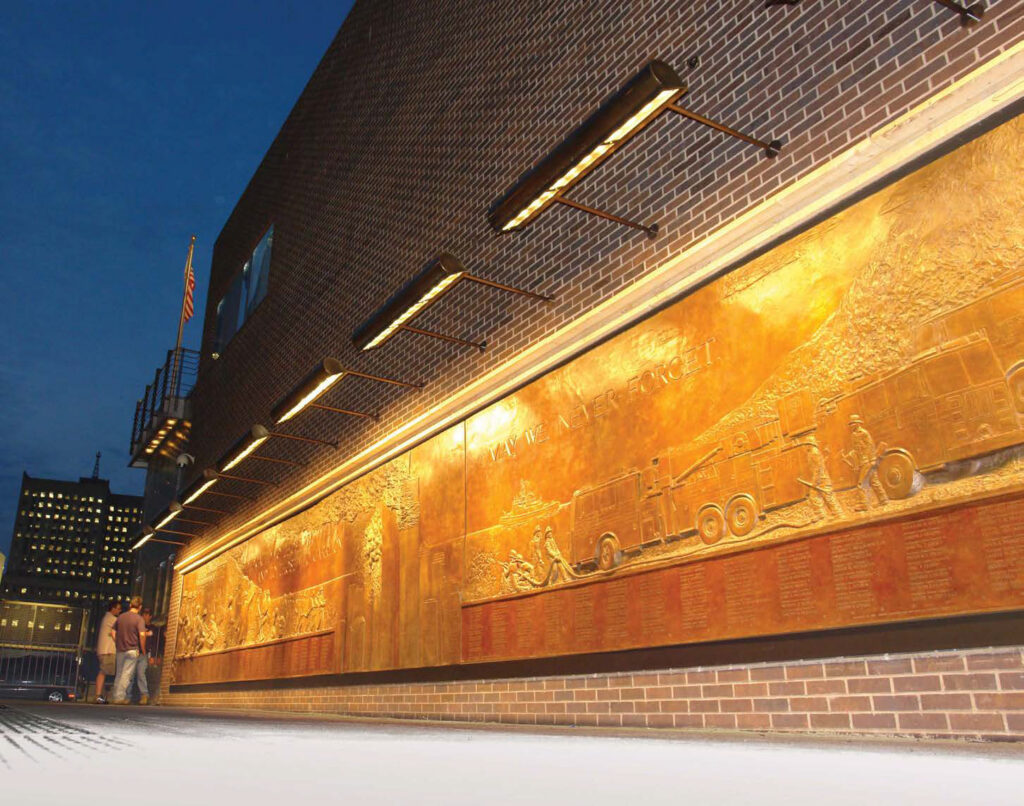
We received our assignment from the FDNY: Ten House, the station directly across from the World Trade Center. Under the guidance of our officer in charge, our crew went to work. Day turned into night, and the details remain vivid in my mind, even 25 years later. I remember the teenager who appeared beside me on the pile in Chuck Taylors and a t-shirt, just wanting to help. I remember the incredible food brought downtown by some of the finest restaurants in NYC. I remember siphoning gas from abandoned cars on the street to fuel the generators, and the heavy presence of a military helicopter gunship constantly hovering in the skies overhead.
Well past midnight, we were notified that a responder shelter had opened in a downtown City of New York office building. A few hours of sleep before dawn sounded like heaven. The ice-cold shower, the simple yogurt, and the cot with a blanket felt like a five-star hotel. It was an American Red Cross shelter. Little did I know that I would eventually spend eight years of my career working with them.
The wee hours of the morning brought mild showers, but work on the pile continued, rain or shine. Eventually, the crushing realization set in that this was a recovery mission, not a rescue: a very hard pill to swallow. As FEMA arrived and roles began to shift, we knew it was time for us to go home.
Driving across Manhattan and getting over the Brooklyn Bridge was nowhere near as easy as it usually was. The National Guard was out in full force, doing its job and doing it well. After some negotiation with a National Guard officer, we finally made it across the bridge and collected my niece. Five smelly, sweaty people from Newport, Rhode Island, completely unprepared for what we had just experienced, began the drive home.
We returned to NYC in October of 2002. We had been invited to the first-anniversary commemoration, but we declined, opting instead to visit as a team the following month. We finally drank in the bar we had passed so often during our deployment, back when all we had wanted was a cold beer.
The following year, I moved to Texas. The pain and trauma had taken root in my soul, and I didn’t talk about it much. I locked it away, sharing it only with those who had lived through the experience alongside me. For decades, the month of September was agonizing.
In commemoration of the tenth anniversary of 9/11, I spoke on behalf of the American Red Cross at the Pentagon. On the actual anniversary in 2011, I spoke at the Dallas ARC headquarters. After the attacks, out of a need for safety, that facility had become the central call center for the Red Cross. That was where I finally began to tell my story.
During a family vacation to NYC in 2011 for Rudy’s 50th birthday, we stopped by Ten House. It was overwhelming, too much for me to bear. But I remember telling my family that it was important to be there, to pay homage, and to give thanks. I was there to visit a part of my soul.
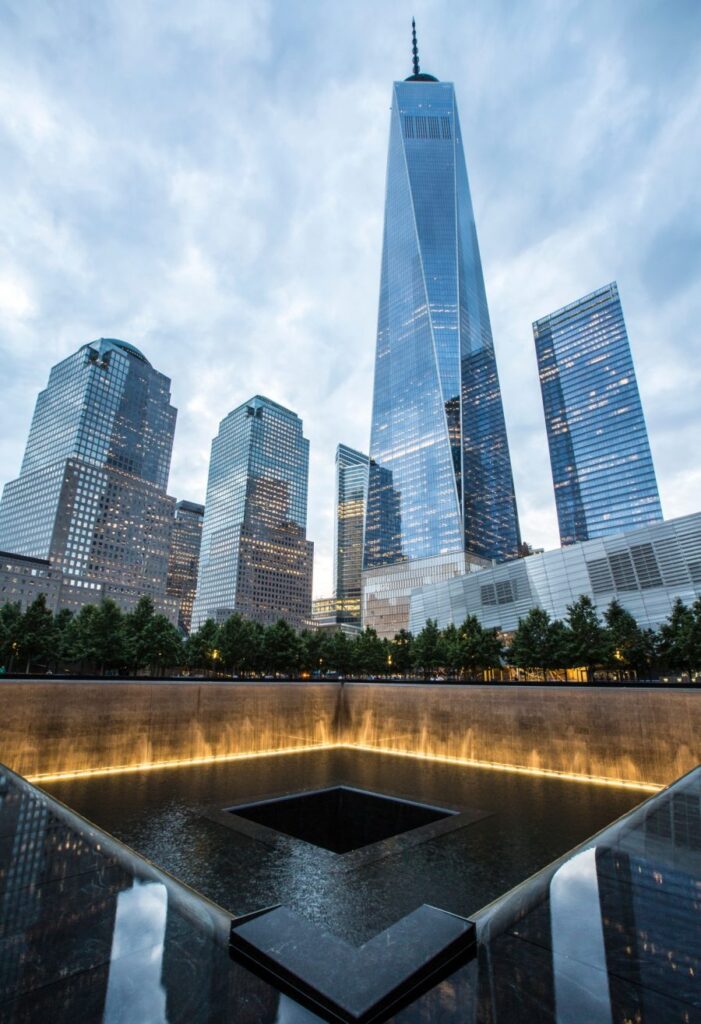
Although I deployed to NYC with the Red Cross for Superstorm Sandy in the fall of 2012, I didn’t return to Lower Manhattan until September of 2022. That year, I visited the 9/11 Memorial and Museum with my dear friend and her sister, and a new level of healing began. The tears still flow as I write this, but the pain now has a healthier release.
I am immensely proud to have been a 9/11 first responder, and I am deeply grateful for the brave individuals I worked beside. My life was forever changed that September morning. Every day, I offer a prayer for the lives that were lost, for those who answered the call to respond, for the community that showed up to support us, and for an end to such senseless harm.